Amanda A. Leslie
Spring 2006
Education
within Our Communities:
The Ties that Bind…and Divide
“Although people tend to use the words schooling
and education interchangeably, they have very different meanings:
schooling takes place in a building; education happens everywhere”
– A. W. Dodd & J. L. Konzal
Education within Our
Communities:
The Ties that Bind…and
Divide
Though we
all live and function within communities, we are divided in our ideas of what
constitutes one. My colleagues at
Claremont, New Hampshire’s Stevens High School, on a survey I gave in early
2006, defined it variously as “connectedness” (R. Roisman, personal
communication, 2006); a “network of people, economies, governments…resources
that interface together…the people and places where you nurture a sense of
self” (N. Lewis, personal communication, 2006); or “an intimate group of people
who rely on each other for physical, emotional, and spiritual support” (G.
Eddy, personal communication, 2006).
This variation in personal definition is key to the notion of
communities; they do not mean the same things to different people, and people
therefore function within and react to them differently. When I considered the meaning of the word in
the fall of 2005, I identified a community as a group of individuals that would
benefit from mutually respectful and cooperative interactions. This differs slightly from, but coheres with,
the meanings shared by my colleagues and hints at the ties within our
professional community.
This
fall definition was not my first examination of the word or subject. I began studying community in the spring of
2005, when I found myself faced with a class that seemed particularly
dysfunctional in its interactions.
Students openly ridiculed one another; they talked above each other in
discussions; they were clearly dismissive of the views of others. In addition, they resisted working with
classmates they didn’t consider friends, sometimes even flat-out refusing to do
so. They were clearly divided. The definition I articulated above perhaps
relates to what I considered lacking in their community.
However, these same students did know what a supportive community looked like. They articulated this awareness in a Quickwrite I gave them on April 6, 2005—where I asked them to consider the characteristics of a supportive community, what might stand in the way of achieving one, and how obstacles might be overcome. In reflecting on their responses, I wrote:
“[They see]
a supportive community as one where people get along with and help each
other. There is a positive and friendly
atmosphere that negates fear and encourages individuals to voice their
opinions, questions, or confusion, as others will listen to them and offer
help. Communication is key, and everyone
recognizes when to speak and when to listen and does so respectfully. People…recognize they are working together to
achieve a specific and common goal…Individual differences and problems are
understood and respected. People work
cooperatively, though each individual has his or her own responsibilities and
is self-motivated. There is a sense of
overall honesty, the environment is non-judgmental, and humor is appropriate
and appreciated,” (Leslie, 2005a).
I was intrigued by the juxtaposition of my students’ actions and their awareness. Their thoughts on the difficulties in achieving the supportive community they described shed some light on the disconnect.
“Students
identified obstacles to achieving this ideal as numerous and originating from
either the students or the teachers.
Students who are impolite or don’t seem to care about learning,
themselves, or others can be an obstacle.
If students seem stuck up or snobby, they can negatively affect the
classroom. In addition, disruptive people
talking at inappropriate times can be an obstacle, as can negativity and bad
communication. When negativity saturates
the atmosphere, people are afraid to ask questions in fear that others might
mock them. With poor communication,
people’s messages can’t get across.
Getting everyone to cooperate and support one another can be a
challenge, due to shyness and/or beliefs and attitudes towards others, such as
sexism or racism. These beliefs could
lead to discrimination, a lack of acceptance, vulgarity, or harsh
language. Teachers who are unqualified,
uncompromising, or uninteresting can also be obstacles in creating a supportive
community,” (Leslie, 2005a).
These were
some of the very issues I’d observed at play in the class and which I have seen
again and again, to varying degrees, in other classes. Further, they were some of the issues I’d
seen affecting the larger communities within the school—both of the staff and
students. At times, many staff members
have behaved both negatively and disruptively at staff meetings, correcting
papers rather than engaging in conversation when asked to, talking loudly with
friends in the midst of the meetings, thereby preventing others from hearing
the central discussion. They have
exhibited the same behaviors for which we scold and punish students. Further, at many meetings, an attitude of
“let’s get this over with as quickly as possible” has prevailed, leading some
to remain silent when they have had questions or concerns with the topic at
hand. Sizer and Sizer, in considering
morals within schools, write, “The students watch us,
all the time. We must honestly ponder
what they see, and what we want them to learn from it,” (1999). While they certainly don’t watch us during
faculty meetings, our behavior there cannot help but carry itself into
interactions and situations they do see.
If we, who are supposed to be their role models, struggle to function as
a supportive community, no wonder they do as well.
Returning to the Quickwrite, my students also shared ideas for minimizing or overcoming at least some of the obstacles, though some felt their peers could neither be helped nor changed.
“[Having]
more group projects and class discussions in which everyone was involved could
help improve the class community… everyone in the class must be involved
in the give and take of information and cooperative effort, not just a few of
the community members. In addition,
students suggested rules be set and enforced, so that the teacher is seen as
having authority (but not too much), and that truly disruptive or unkind people
be sent out of the class. They also
thought students should be able to choose their own seating or at least not be
forced to sit beside someone they don’t get along with” (Leslie, 2005a).
My students’ ideas paralleled some
of the same conclusions I’d been reaching as a result of both closely observing
the three classes I was then teaching and reading relevant research on the
topic. I came to identify “[connectedness],
care, mutuality, trust, responsibility, power, and fear” (Leslie, 2005a) as
intimately related to community creation by the end of the 2004-2005 school
year.
Though I
believe the seven factors identified above are central to communities everywhere,
I think they function uniquely in
These
days, many of
Perhaps
the event to most negatively and directly impact the school community and its
reputation was the loss of the school’s New England Association of Schools and
Colleges (NEASC) accreditation in the mid 1980s. This was tied to inadequate facilities, a
result of small and unapproved budgets.
The accreditation was regained within a number of years, but it was
quickly followed by the Claremont lawsuit—a suit against the state, filed by
several school districts, protesting the gross inequalities in school funding
between districts.
Though
the districts won their suit, it solidified an already existing stigma of
poverty and poor performance that many residents, students, and even teachers
in
The
A Collaborative Professional
Community
After examining my classes in the spring of 2005, I understood more about class communities; but much of this new knowledge related to their complexity and the influences upon them. Particularly, my research told me, in considering what happens in the classroom, “the values of the school and city community cannot be overlooked,” (Leslie, 2005a).
With this
in mind, I entered the Plymouth Writing Project’s Summer Institute. Over the course of the five-week program, I
read…and read and read books, articles, and stories that seemed related to
community. The literature strongly
supported the conclusions I’d reached regarding the importance of considering
the communities within which a school exists when considering classroom
community.
Additionally,
the Institute introduced me to a new model for professional community. In Stevens, I work with my colleagues. Sometimes we work together towards common
goals, and many of us share similar ideas regarding what it means to be part of
a school community (as evidenced by the definitions aforementioned); but our
interactions rarely take on the intense collaborative focus I found within the
Plymouth Writing Project (PWP). Alex
Pomson, in One Classroom at a Time? Teacher Isolation and Community Viewed
Through the Prism of the Particular considers why.
Pomson
identifies three modes of teacher interaction: cooperation, collegiality, and
collaboration. He notes that while the
latter is the aim, the first is most often seen and experienced (2005). At Stevens, I regularly collaborate with two
other teachers and a para-educator—all members of a teaching-team. This year, 2005-2006, an additional teacher
joined our team but has refused our efforts to draw him into
collaboration. I have wondered again and
again at his reasons for agreeing to work with us.
Pomson
cites 3 possible types of motivation for teacher interactions: “instrumental,”
where teachers are looking for “help to carry out the day-to-day routines”;
“moral,” where they strive to “advance the best interest of children”; and
“hedonic” or personal, where teachers are in it to increase their “self worth
and status” (2005). He writes, “without
careful attention to the diverse impulses that lie behind the embrace of
professional community, and without soliciting the consent of those who are supposed
to join such communities, the drive to end professional isolation might prove
self-defeating,” (2005).
Jane, Dave,
Jean, and I—the collaborative members of my teaching team—failed to consider
our fifth member’s motivation in joining us.
Although he joined us weekly for team meetings at the beginning of the
year, he did not, though invited, join in planning joint activities or offer
ideas for how to tie his portion of the class to ours. As the school year progressed, he eventually
stopped attending even the weekly meetings, isolating himself entirely and
divorcing his section of the class from ours.
Pomson cites a paucity in training, a lack of time, and little say in
who one is grouped with as potential reasons teachers avoid or fail to invest
in collegial relationships (2005).
So, my
experiences within the PWP were refreshing.
I left the Summer Institute invigorated and with resolve, as well as an
increased awareness of the enormity of the subject I was considering. In reflecting on my summer reading, I wrote:
“Part of the challenge will be to connect [my and my
students’] work in the classroom to our lives outside the classroom; I intend
to do this through more frequent and focused communication with people outside
of the school building,” (Leslie,
2005b). In retrospect, I neglected to
mention connection within the school as well.
Stevens High
School
Which brings me to the 2005-2006
school year. In late August, I found
myself contemplating a schedule identical to the previous year’s: two
year-long, team-taught Structured Language/English courses designed for
students significantly below grade level in literacy skills and two
semester-long, general-level American Literature & Writing I courses. (
In writing a research plan for the year, I decided I could not limit my observations to one or two of these classes. Community is integral to each, so examination of all my classes would provide the clearest picture. Likewise, I was unwilling to limit myself to one aspect of community—just the classroom community, the collegial community within a school, or the city community—as the professional research I’d read told me they were and are irrevocably knotted. So, contrary to the advice of others, I set out a plan to study all the communities I could.
Additionally,
I felt it important to look at all the communities affecting my classroom
because I had noticed strikingly similar characteristics between them. Many of the students I studied in the spring
of 2005 lacked self-esteem; in remarking upon the larger
Reflecting this, my central research question at the start of the 2005-2006 school year was, what are the most effective ways to establish a supportive classroom community and to help that community extend beyond the classroom to connect with the spheres in which it exists? Further, I wanted to discover the effects of such establishment, extensions, and connections. I also wanted to know how teachers engage students, how students engage their peers, how teachers engage their colleagues, and how those within the school engage students’ families and other community members in meaningful dialogue.
In hopes of answering these questions, I set myself a series of tasks—all geared towards data collection—some of which provided valuable and complicated information, some of which seemed ineffective, and some of which fell by the wayside. Intending specifically to improve my classroom communities, I decided to use peer interviews and Students of the Week to build communities, as well as regular class meetings to foster and support the communities throughout the year. In an effort to examine the professional community within the school, I planned to interview and survey my colleagues, as evidenced by the various definitions shared at the outset. And, in order to reach out to the larger community and connect it to my classes, I planned to continue an elementary partnership established the year before, institute quarterly Family Writing Nights, communicate with families via regular newsletters, and focus students on their community through writing assignments.
Connections within the Classroom
Peer Interviews
Hoping to
establish cohesive and supportive class communities from day one, I had
students interview one another at the start of each of my courses this
year. One of the difficulties I had
noticed, particularly in the spring of 2005, was students’ unwillingness to
step beyond their comfort zones to work with classmates they didn’t already
count as friends. At times, this
unwillingness bordered on, and even occasionally became, hostility. A second problem I noted was that some
students still struggled with each other’s names at the end of a semester. I hoped these interviews would help alleviate
those issues.
Students
were seated alphabetically, which helps me learn everyone’s name; and I
instructed them to pair up with one of their neighbors. This way, I hoped to force them into
interacting with even those classmates they didn’t know. First semester, I gave them fairly free-range,
encouraging them to discover as much as they could about their partners. I also told them to take notes, as they’d
both be introducing this person to the rest of the class and writing a short
narrative about him or her.
I
circulated as the students interviewed one another, pleased by how obviously
engaged they seemed. When they presented
their partners to the class the following day, everyone listened attentively,
occasionally asking questions in response to things shared. I was impressed and knew I’d use this
community-building activity again.
However, the results of the narrative writing were not as positive. Though they were given time in class to begin
the assignment and to double-check the facts with their partners, only about
half of the students completed and handed in the writing. This seeming apathy towards schoolwork is a
constant challenge I face, which I see as directly tied to the negative
self-image many students hold and to a lack of parental involvement and
support. I have tried to combat it this
year through place-based writing, which I will detail further on.
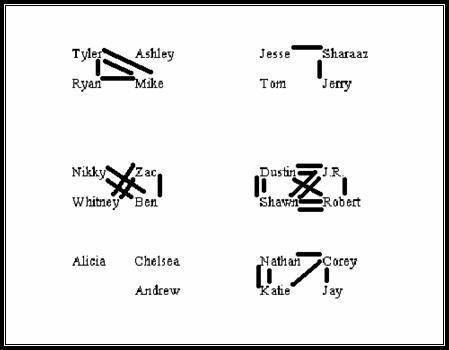
Figure 1. The arrangement of students reflects the
alphabetical seating. The lines drawn
between student names indicate the preferences expressed for their seatmates. Positive and negative preferences unrelated
to the seating arrangement are not represented. All students had interviewed one of the
people sitting at their desk cluster.
With the one American Literature & Writing
I class beginning semester two, I revised the peer interview activity. Instead of giving them entirely free range in
their interviews, I asked that they share information about themselves, as
well as at least one part of the self-assessments I have all of my students
write in the beginning, middle, and end of my courses. In these self-assessments, which I model for
them, they must address their goals for the class (as well as any general goals
they wish to share) and their strengths and weaknesses relative to reading,
writing, and communicating. I was curious
to see whether students would share primarily the more personal information or
the information related to the course when introducing one another. They shared both, and the activity again
helped to establish a classroom community.
I saw this evidenced particularly when I conducted a sociogram, where I
asked student to jot down the student(s) they’d most like to work with, as well
as anyone to whom they felt particularly adverse. Though I had seated them alphabetically (with
a few exceptions necessitated by late arrivals and additions), they overwhelmingly
indicated a preference for working with at least one of their seatmates, as you
can see in Figure 1.
As
a side note, I think I must mention how many friends there are within this
particular class. For the most part,
they genuinely like each other. However,
the American Literature & Writing I class I taught first semester also
contained many pairs and groups of friends.
The friendliness within this second semester group affects but cannot
wholly explain the preferences expressed in the sociogram.
Class Meetings
A second
idea I implemented this year stemmed from the reading I’d done while immersed
in the PWP Summer Institute. I’d
encountered the idea of class meetings, used to encourage dialogue and open
discussion within the classroom. I’ve
struggled with both of those things in many of my classes. Students talk to me, not each other, during
whole class discussions. They turn to
me, not each other, for answers and ideas.
And, at least one student in every class will often take a zero rather
than offer even one contribution aloud.
In hopes of
improving the conditions noted above, I decided to try class meetings; and, at
the start of the school year, I set aside about fifteen minutes at the end of
classes on Fridays. In addition, I
established a meeting suggestion box, which I showed to students and encouraged
them to use. The first few weeks, the
meetings seemed fairly successful.
My team
teachers for Structured Language/English had suggested we incorporate a word
activity into the meetings, and students got so into it, we never got around to
having a discussion. That seemed okay,
though, since they were excited about what they were doing. In my American Literature & Writing I
class, the first meeting centered on questions the students had regarding the
class. It made sense, since they were
still figuring out expectations, routines, and such. In fact, I found that discussion so
beneficial, I focused each of the meetings the second week on dialogue. I asked students to briefly write about what
had and hadn’t worked for them that week, and they shared their responses. In all three classes, they raised valid
points, to which I responded, with my team’s help during the Structured
Language/English meetings. Their
comments ranged from complaints about the construction happening outside our
window (which was ridiculously noisy and dusty, necessitating closed windows at
the hottest time of the school year) to assignments they didn’t quite
understand, to activities they absolutely loved. I think they felt heard; and, in many cases,
that was enough.
However, these Friday meetings quickly lost their newness, and student interest in them flagged. Only once was a topic dropped into the suggestion box, and it was something to which I’d already responded. By mid-October, I was no longer conducting them every Friday; and I finally gave up scheduling them entirely. I do not think, though, that I’ve totally abandoned them.
The question I set out with focused on how regularly they needed to be used to be effective. I found regularity is not the deciding or defining characteristic; need is. The class meetings I now hold are unscheduled for the most part. They occur when an issue or concern is raised or when something happens in class that needs to be debriefed. For example, when the sister of one of my first semester students died, leading him to miss significant chunks of time from school, I talked with his class about how we might best support him. Second semester, when a student had a horrible accident that took the sight in one of his eyes, the class clearly needed to discuss it. Less drastically, when something in class just wasn’t working, or when something had gone particularly well, impromptu meetings have helped work through the problem and debrief the success.
Meaningful communication within the classroom cannot be imposed, though it can be encouraged through the creation of certain conditions. The establishment of a cohesive, trusting, and thoughtful community of learners is one such condition, as is the posing and discussion of real, thought-provoking questions and situations that engage and validate students.
Students of
the Week
Student of the Week
Each week, one (or maybe
two) student will be randomly selected as Student of the Week. This role comes with rights and responsibilities.
1. Each Wednesday, the
Student of the Week will be responsible for the Journal Prompt.
2. Anytime I need an errand run, I’m turning to the Student of the Week. If he or she is unwilling, the role will be relinquished
3. The Student of the Week
has first dibs on the green Lazyboy. If
he or she doesn’t want it, it’s first come, first serve.
4. Each week, there will be a class card for the Student of the Week. Construction of it is on a rotating volunteer basis, but everyone will be graded on writing in it. These must be nice comments. The purpose is to practice civil discourse. You all have to work with one another. You should be able to identify at least one positive thing about each other member of the class.
The objective of this is to have each individual contribute meaningfully to the class and take somewhat of a leadership role.
Figure 2.
Another
practice I implemented within each class, which I’d encountered in a workshop I
took during the summer of 2004, was the Student of the Week. Having a rotating Student of the Week, I
hoped to lessen student resistance to working cooperatively with all of
their peers, and to give each student a chance to stand apart from the group,
take on increased responsibility, and receive positive attention. This succeeded to varying degrees with each
of my classes.
One
of the activities I connected to the Student of the Week was the creation of
cards. I asked that all students create
a card for the Student of the Week, in which they were to write a brief and
positive note. I did the same.
“I’m
not going to write something nice to someone I hate,” was the most striking
protest I heard, articulated by one of my first semester American Literature
& Writing I students on more than one occasion. I responded each time by engaging her, and
sometimes the whole class, in a conversation about getting along and working
effectively even with people you might not like on a personal
level. Intellectually, I know they heard
me. However, not all students
internalized the message, and only about half of my students—across all three
classes—created a card each week. My
response to this varied depending on the class structure and dynamics.
Because
both of my Structured Language/English classes were year-long and had
lower numbers of students than most other classes, everyone had a chance to be
the Student of the Week by the start of the second quarter. I allowed the practice to then peter out, not
wanting the students’ apathy towards creating cards to offset potential
benefits of the practice. Additionally,
I felt their communities were firmly established—many of the students had
worked together in the same class the year before—and that there was no need to
run through the students again.
The
situation was different in my American Literature & Writing I class. Only about half the students had been the
Student of the Week by the start of quarter two, and I didn’t think it would be
fair to abandon the practice before they’d all had their turn. Some obviously looked forward to it. So, I asked for their help. I shared my frustration that they were not
creating cards for one another with them and asked how we might “fix” the
problem. Their solution was simple:
allow class time for the activity. I had
established it as a running homework assignment. We agreed that ten minutes would be
sufficient time to complete the task, and I began giving it to them at the
start of every Wednesday. I saw a
remarkable increase in both the number of cards created and their
quality.
However, I also noticed that few students seemed to really value the cards created for them, sometimes dumping them in the recycling bin the same day they received them, after having read them all. I revamped the practice further for my second semester American Literature & Writing I class, and it has proven much more beneficial.
First
of all, I responded to students’ confusion over the purpose of the Student of
the Week —which they had expressed with occasional questions along the lines of
“why are we doing this?”—before it had a chance to surface. The first day, when I introduced students to
class procedures, themes, and texts, I also introduced them to the Student of
the Week concept via the handout shown in Figure 2. A lack of understanding of the practice’s
purpose directly contributed to the resistance I encountered with the first
semester class, as I have not once encountered it with my second semester
class.
Second, I
changed the idea of the cards yet again.
Instead of each student creating their own, I have asked one student
each week—someone clearly connected to the Student of the Week—to create a
class card, which is passed around.
Everyone simply writes his or her own positive note within it. Not once have I encountered resistance to
this or a negative inscription.
Additionally, I have observed students still carrying the cards in their
binders long after their week is past.
This
semester, students have shown a real excitement about being the Student of the
Week. There’s no chance of me forgetting
to draw a name from the box in which they all put their names on the first day
of class, as there’s always at least one person who comes in on Monday, wanting
to know who’s been picked. I have
encountered very few of the negative interactions between students —both within
the context of the Student of the Week and within the class more generally—that
first led me to consider the role of community in the classroom. I don’t feel I could decisively say this is
solely due to the revised Student of the Week practice, but it has been only
beneficial for this second semester American Literature & Writing I
class. One young woman, who initially
claimed she did not want to be the Student of the Week, later wrote about the
experience in her journal. Her week had
luckily coincided with the week of her birthday, and she noted how glad she’d
been that I hadn’t let her opt out of the role—that it had helped her have a
really good week.
Considering
all three practices detailed above—Peer Interviews at the start of each class,
Class Meetings held when necessary and appropriate, and rotating Students of
the Week—the communities of the classes I’ve taught this year have improved. Structuring time and activities that
encourage connection and communication is key; supportive classroom communities
will not create themselves.
Reaching Beyond the
Classroom Walls
As I noted earlier, the problems I encountered within my classes were not limited to student interactions. I also found myself faced with a serious problem regarding students’ work ethic, or lack thereof. I did not feel this was something that could necessarily be corrected by the establishment of a supportive class community. I did, however, believe it could be lessened through the establishment of curricular ties to the larger community. Kate Freeland, the school librarian, in reflecting on the role of community within a school, wrote the following:
“[It’s] very important. People in school, particularly the students have to spend a great deal of time in a place they don’t necessarily want to be, doing work that may be frustrating or difficult. Knowing that they/we are part of a community, that everyone is working towards the same goal, makes it easier. Also, for students or staff who lack family or community connections elsewhere, the feeling of belonging to a school community is essential. I don’t think that people work or live well in isolation. Community appeals to our human nature,” (personal communication, 2006).
In establishing ties to the communities beyond the classroom, I hoped to foster the sense of belonging to which Kate referred. In doing so, I also hoped to combat the negativity some students had expressed regarding their communities.
When
responding to the question of their apathy, students sometimes complain that
schoolwork has no relevance to their lives.
They do not automatically accept that we teachers know what is best for
them and what will prepare them for life after high school. In the first
chapter of When, Where, What, and How Youth Learn:
Blurring School and Community Boundaries, Irby,
Pittman, & Tolman hold that the lines between school and community, home,
work, and society must be blurred if we hope to “ensure that all young people
are prepared for careers, citizenship, and family and community life,”
(2003). One way to blur those lines is
to have students communicate, interact, and visit community members and places
not in the physical school building.
Creating New Communities: Literacy Buddies
In the
2004-2005 school year, Jane, one of my Structured Language/English team
teachers established a partnership with Deb, a second grade teacher within the
school district in order to do just that.
I continued the program this year.
As a